
Boxing Camps in Mexico: Why Training in a Small Group Can Be Better
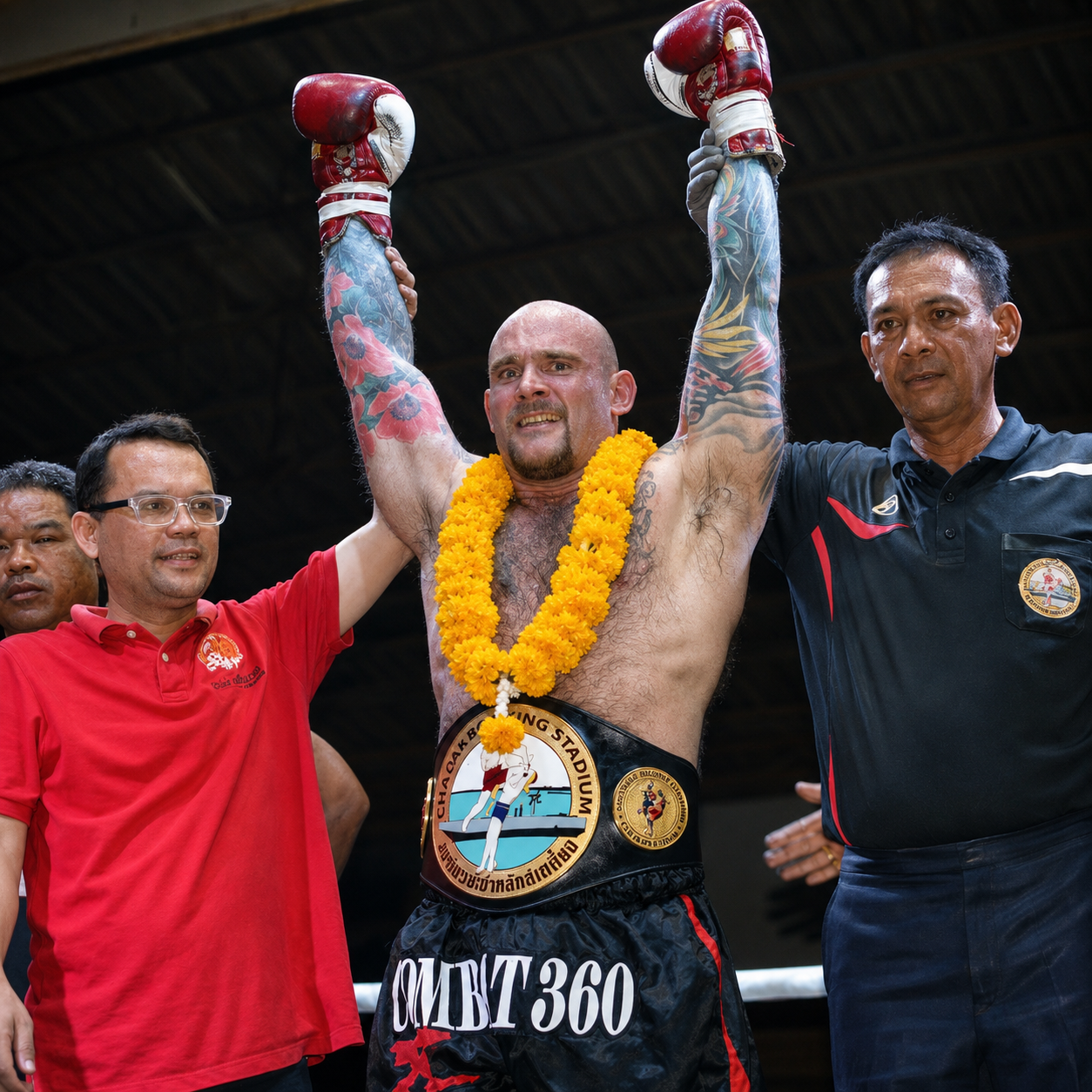

If you are looking at boxing camps in Mexico, it is easy to compare them by location, facilities, number of classes or price. But one of the most important factors is often overlooked:
How much individual coaching are you actually going to receive?
There is nothing inherently wrong with training in a large group. Large boxing gyms can have great atmosphere, plenty of training partners and excellent coaches. But when 20, 30 or more people are taking part in the same session, there is a practical limit to how much time a coach can spend analysing each individual.
That matters because boxing should not be one-size-fits-all.
The Best Boxing Style Is the One That Works for You
Every boxer needs to learn the fundamentals: stance, balance, footwork, defence, distance and correct punching mechanics.
But learning the fundamentals does not mean that everybody should eventually box in exactly the same way.
Your height, reach, weight, speed, strength, mobility, fitness level and natural reactions can all influence which tactics are most effective for you.
A tall, lean boxer with a significant reach advantage has a very different set of physical tools from a shorter, stockier boxer of the same weight.
For example, taller fighters will often benefit from learning how to control distance, make effective use of straight punches and exploit their reach. Shorter fighters may need to become much better at safely closing distance, creating angles and working effectively at closer range.
Even coaching resources recognise these differences. Boxing Scotland, for example, gives different stance and tactical considerations for taller and shorter boxers, noting the advantages taller fighters can gain from maximising straight punching and the need for shorter fighters to reduce the distance against taller opponents.
The fundamentals remain the same. How you apply them can be completely different.
The Problem With Teaching Everybody the Same Style
When a coach is responsible for a very large class, individualisation becomes difficult.
The coach has to organise a session that works reasonably well for everybody. That often means demonstrating a technique, combination or movement and having the entire group repeat it.
That can be perfectly useful for developing fundamentals.
The problem comes when that becomes the only way you are taught.
You can end up learning how your trainer likes to box rather than discovering how you should box.
Interestingly, established boxing coaching guidance acknowledges this problem. Coaching materials recommend dividing groups according to factors such as skill level and physical characteristics when athletes have different abilities and builds.
At Combat 360X, our small-group approach allows us to take that principle much further.
We Don't Want to Turn Everyone Into the Same Boxer
When we work with somebody, one of the first things we want to understand is what we actually have in front of us.
Are you tall for your weight?
Do you have unusually long arms?
Are you shorter but physically powerful?
Are you naturally quick?
Do you move well?
Do you prefer fighting at distance or putting pressure on an opponent?
What happens when somebody attacks you?
And perhaps most importantly:
What are we training you for?
Someone learning boxing for fitness has different requirements from someone preparing for their first amateur bout. An experienced martial artist adding boxing to their existing skill set may need something different again.
Instead of forcing everyone into one predetermined style, we want to develop the fundamentals and then help you understand how to use them according to your own attributes.
Tall and Long? Learn to Use It
Imagine two fighters who both weigh 75 kg.
One is tall, lean and has a long reach. The other is considerably shorter, stockier and physically powerful.
Teaching them exactly the same tactical boxing style makes very little sense.
For the taller boxer, distance may be one of their greatest weapons.
We may spend more time developing the jab, straight punches, range control, footwork and the ability to make an opponent work just to get close enough to attack.
But simply being tall isn't enough.
You have to learn how to use that height and reach.
That means understanding distance rather than continually giving it away, knowing when to move rather than simply retreating, and learning how to punish an opponent as they attempt to close the gap.
Shorter and Stockier? Your Game May Be Completely Different
Now take the shorter boxer.
Telling them simply to stay outside and exchange jabs with someone who can reach them first is unlikely to make the best use of their attributes.
Their training may need greater emphasis on closing distance, head movement, changing levels, creating angles and getting into positions where shorter punches and physical strength become more useful.
They need to understand how to get through the opponent's preferred range and into their own.
Neither approach is automatically better.
They are simply solutions to different problems.
This Is Where Small-Group Coaching Makes a Difference
Personalisation requires observation.
A coach needs enough time to actually watch you.
Not just see whether you completed the combination, but notice how you completed it.
Where were your feet?
Were you balanced?
Were you at the correct distance?
Why did that punch miss?
Why are you continually getting caught with the same shot?
Are we trying to correct something that is genuinely a technical mistake, or are we trying to make you move like somebody with completely different physical proportions?
Good boxing coaching is not simply holding pads and calling combinations.
It is identifying problems and finding solutions.
That becomes much easier when the coach knows the athlete and has enough time to pay attention to the details.
Personal Attention Doesn't Mean Ignoring the Fundamentals
Individualised coaching doesn't mean that everybody gets to invent their own version of boxing.
Fundamentals still matter enormously.
Balance, positioning and footwork underpin effective punching and defence; England Boxing's coaching guidance specifically emphasises maintaining balance, controlling distance and direction, and getting the feet into position to punch effectively.
We teach those foundations.
Then we work on applying them to you.
Think of the fundamentals as the tools. Individual coaching teaches you which tools to use, when to use them and how to make them work with the attributes you actually possess.
Small Groups Also Mean More Immediate Corrections
One of the biggest advantages of a small training environment is that mistakes can be caught early.
If you perform a movement incorrectly hundreds of times, you aren't simply practising — you may be reinforcing a habit that eventually has to be unlearned.
When coaches can regularly observe individual athletes, corrections can happen while the movement is being developed.
Move the foot slightly.
Change the distance.
Turn the hip.
Don't reach.
Keep the opposite hand home.
Move your head after the combination.
Small adjustments can make enormous differences over hundreds or thousands of repetitions.
You're Not Just Another Person in the Class
There are many reasons people travel to attend boxing camps in Mexico.
Some want to lose weight.
Some want to learn boxing from the beginning.
Some already have years of experience and want to improve technically.
Others are preparing to compete.
Those people shouldn't necessarily receive identical training.
At Combat 360X, keeping our training groups small allows us to know the people we are coaching: their experience, their strengths, their weaknesses and what they came here to achieve.
Our objective isn't simply to put you through a hard workout.
It's to make the training relevant to you.
Choosing the Right Boxing Camp in Mexico
When comparing boxing camps, don't only ask how many hours per day you can train.
Ask what those hours actually look like.
How many people will be training alongside you?
Will the coaches know what your goals are?
Will somebody correct your technique?
Can the training be adapted to your experience?
And will the coaches help you develop a style that makes the most of your individual attributes?
A huge training volume isn't necessarily the same thing as high-quality training.
For some people, a smaller group with more individual coaching can provide far greater value.
At Combat 360X in La Paz, Mexico, that's exactly what we aim to provide.
Learn the fundamentals. Understand your attributes. Develop a style that works for you.


Comments